

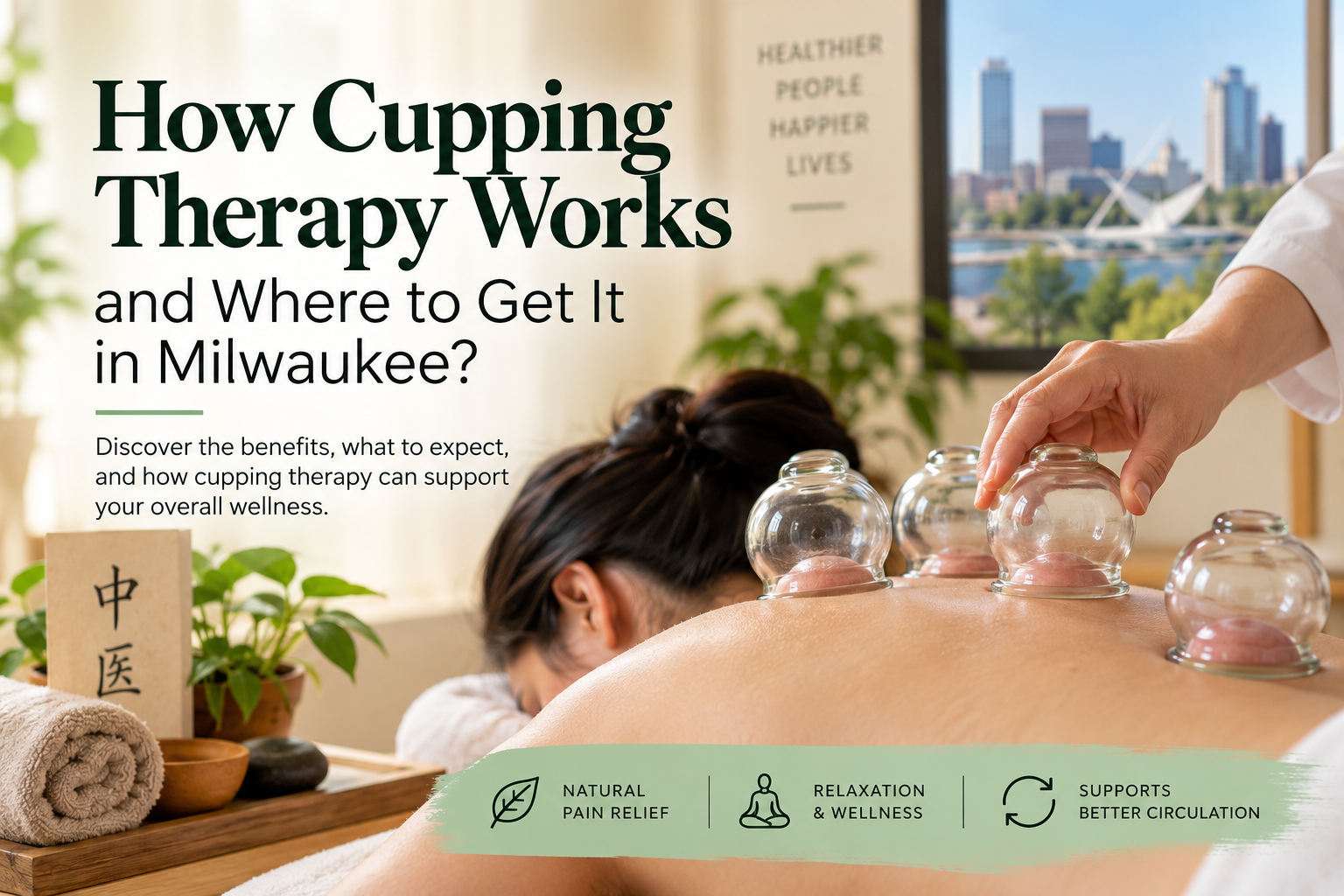
Cupping therapy has moved well beyond its ancient roots to become a go-to complementary approach for people managing muscle tension, chronic discomfort, and everyday stress. Once mostly associated with Traditional Chinese Medicine practitioners, cupping is now a familiar sight at wellness clinics and even among athletes seeking recovery support.
For Milwaukee residents dealing with tight shoulders, nagging back pain, or general wellness goals, cupping offers a non-invasive option worth exploring. It’s often used alongside other treatments like acupuncture or massage rather than as a standalone fix, and it’s typically administered by trained acupuncture and Traditional Chinese Medicine (TCM) practitioners who understand how to tailor the treatment to individual needs.
This guide breaks down what cupping therapy actually is, how it works, the different techniques practitioners use, and what you can expect if you decide to try it. We’ll also cover safety considerations and point you toward a trusted option for cupping therapy in Milwaukee.
What Is Cupping Therapy?
Cupping therapy is a treatment technique where practitioners place specialized cups on the skin and use suction to create a gentle pulling effect. That suction draws the skin and underlying tissue slightly upward, which is thought to help increase local circulation in the treated area.
The practice has deep roots in Traditional Chinese Medicine, where it’s often used alongside acupuncture as part of a broader approach to balancing the body’s energy and supporting natural healing processes. Modern practitioners typically use cups made from glass, plastic, or silicone, depending on the technique and the patient’s comfort.
It’s worth noting that cupping therapy in Milwaukee, like elsewhere, is generally offered as a complementary therapy. It’s not meant to replace necessary medical care, but rather to work alongside it as part of a broader wellness strategy. Anyone considering Milwaukee cupping therapy should view it as one tool among several for managing tension and supporting overall well-being.
How Does Cupping Therapy Work?
Creating Suction
The core mechanism behind cupping is simple: suction. Some practitioners create this suction using heat, briefly warming the air inside the cup before placing it on the skin. As the air cools, it creates negative pressure that pulls the skin upward. Other practitioners use a mechanical or handheld pump to achieve the same effect without any flame involved.
Regardless of the method, the cup stays attached to the skin because of that pressure difference. As the suction pulls tissue upward, it’s believed to help loosen tight muscles and encourage blood flow to the area.
What Happens During Treatment?
Once the cups are in place, they may stay there for several minutes, depending on the specific treatment plan. According to Dr. Zhou’s Acupuncture, Pain Management and Natural Wellness Clinic, cups typically remain in place for approximately 5 to 10 minutes, depending on the condition being addressed.
Practitioners often apply multiple cups across different areas of the body during a single session, targeting the spots where tension is most concentrated. In some cases, oils are applied to the skin first, allowing the practitioner to glide the cups across the surface rather than leaving them stationary. This moving technique is sometimes used to address larger muscle groups. Every treatment should be customized to the individual, factoring in their specific concerns, tolerance, and health history.
What Are the Different Types of Cupping?
Cupping isn’t a one-size-fits-all treatment. Practitioners typically choose from a few different approaches based on the patient’s needs and preferences.
Dry Cupping
Dry cupping is one of the most commonly discussed forms of cupping. It creates suction on the skin’s surface without breaking it, making it a lower-intervention option for people new to the treatment.
Air Cupping
Air cupping relies on a manual or mechanical pump to generate suction instead of using heat. Because there’s no flame involved, some patients find this approach more comfortable or less intimidating, particularly for their first cupping experience.
Wet Cupping
Wet cupping involves lightly puncturing the skin’s surface before applying the cup. This technique draws a small amount of blood and involves additional considerations around hygiene and technique. Because of this, wet cupping should only be performed by appropriately trained and experienced professionals.
What Are the Potential Benefits of Cupping Therapy?
People seek out cupping for a range of reasons, though it’s important to approach these potential benefits with realistic expectations rather than guarantees. Some of the most commonly cited reasons people try cupping include:
- Easing muscle tension and tightness
- Temporary relief from certain types of discomfort
- General relaxation and stress relief
- Supporting circulation in the treated areas
- Complementing other therapies like acupuncture or massage
- Supporting recovery and overall body wellness
Many practitioners, including those at Dr. Zhou’s clinic, incorporate cupping directly into acupuncture treatments rather than offering it in isolation. This combined approach reflects how cupping has traditionally been used within Traditional Chinese Medicine—as one piece of a broader treatment strategy rather than a standalone cure.
What Can You Expect During a Cupping Session?
If you’ve never tried cupping before, knowing what to expect can ease any nerves. Here’s a general breakdown of the process:
- Initial consultation: Your practitioner will discuss your health concerns, goals, and medical history.
- Treatment preparation: The practitioner identifies the areas of your body that would benefit most from cupping.
- Cup placement: Cups are applied to the selected areas of skin.
- Suction: Depending on the technique used, the cups create gentle-to-firm suction.
- Removal: Cups are carefully removed once the appropriate treatment time has passed.
- Aftercare: Your practitioner will explain what to expect afterward, including possible skin marks.
It’s common to notice circular marks or bruising after a session. This happens because the suction causes superficial blood vessels to expand, and these marks typically fade over the course of several days.
Is Cupping Therapy Safe?
Cupping therapy can be an appropriate option for many people, particularly when it’s performed by a qualified, experienced practitioner. That said, it’s not entirely without side effects. Temporary effects can include:
- Circular marks on the skin
- Bruising
- Mild skin discomfort
- Temporary swelling
These effects are usually short-lived, but a proper professional assessment beforehand matters. Not everyone is a good candidate for cupping, depending on individual health circumstances. Before beginning treatment, be sure to disclose any relevant medical conditions, medications you’re taking, pregnancy, skin conditions, or bleeding concerns to your practitioner. Cupping isn’t universally appropriate for everyone, and a qualified provider should help you determine whether it’s a good fit for your situation.
Where Can You Get Cupping Therapy in Milwaukee?
If you’re searching for cupping therapy in Milwaukee, Dr. Zhou’s Acupuncture, Pain Management and Natural Wellness Clinic offers cupping as part of its broader Traditional Chinese Medicine and wellness services.
Location: 4601 N Oakland Avenue, Suite 101, Shorewood, WI 53211
Phone: (414) 962-5249
Text: (414) 405-1688
Dr. Xiping Zhou has practiced acupuncture and Traditional Chinese healing arts for decades, incorporating a range of approaches including acupuncture, Chinese herbal medicine, medical Chinese massage, and cupping therapy into personalized treatment plans.
Looking for cupping therapy in Milwaukee? Contact Dr. Zhou’s Acupuncture, Pain Management and Natural Wellness Clinic to discuss your goals and determine whether cupping may be an appropriate part of your personalized care plan.
How to Choose a Cupping Therapy Provider in Milwaukee
Not all cupping providers offer the same level of expertise or care. Keep these factors in mind as you evaluate your options:
- Check qualifications and experience. Look for practitioners with formal training in cupping and Traditional Chinese Medicine.
- Ask about technique. Find out whether they offer dry, air, or wet cupping, and why they’d recommend one over another for your needs.
- Ask how treatment is customized. A good provider tailors the approach to your specific concerns rather than applying a generic protocol.
- Discuss your health history. Be upfront about any conditions, medications, or concerns that might affect your candidacy for treatment.
- Confirm hygiene and safety standards. This is especially important for techniques like wet cupping.
- Choose clear communicators. Your provider should explain what to expect before, during, and after treatment.
- Consider integration with other therapies. Providers who offer acupuncture, massage, or herbal medicine alongside cupping can build a more comprehensive care plan.
Taking the time to vet a provider goes a long way toward ensuring a safe, effective experience.
About Dr. Zhou’s Acupuncture, Pain Management and Natural Wellness Clinic
Dr. Zhou’s Acupuncture, Pain Management and Natural Wellness Clinic is a Milwaukee-area practice focused on acupuncture, Traditional Chinese Medicine, pain management, and complementary wellness care. Dr. Xiping Zhou established practices in Madison and Milwaukee in the 1990s and brings decades of experience in acupuncture and Traditional Chinese healing arts to every patient interaction.
The clinic offers a range of modalities, including acupuncture, Chinese herbal medicine, medical Chinese massage, and cupping therapy, allowing treatment plans to be tailored to each patient’s individual needs. If you’re curious whether cupping might fit into your own wellness routine, reach out to the clinic to discuss your goals and health history.
FAQs
What is cupping therapy?
Cupping therapy is a treatment where practitioners place specialized cups on the skin and use suction to draw the skin and tissue upward, which may help increase local circulation and ease muscle tension.
Does cupping therapy hurt?
Most people describe cupping as a pulling or tight sensation rather than pain. Some mild discomfort is possible, especially with firmer suction, but it’s generally well-tolerated.
How long does a cupping session take?
Cups typically remain in place for approximately 5 to 10 minutes, though the full session—including consultation and treatment of multiple areas—may take longer.
How long do cupping marks last?
The circular marks or bruising that can appear after cupping usually fade within several days as the superficial blood vessels return to normal.
What does cupping therapy treat?
Cupping is often used to help with muscle tension, temporary discomfort, relaxation, and circulation support. It’s typically used as a complementary therapy alongside acupuncture or massage rather than as a standalone treatment for specific medical conditions.