

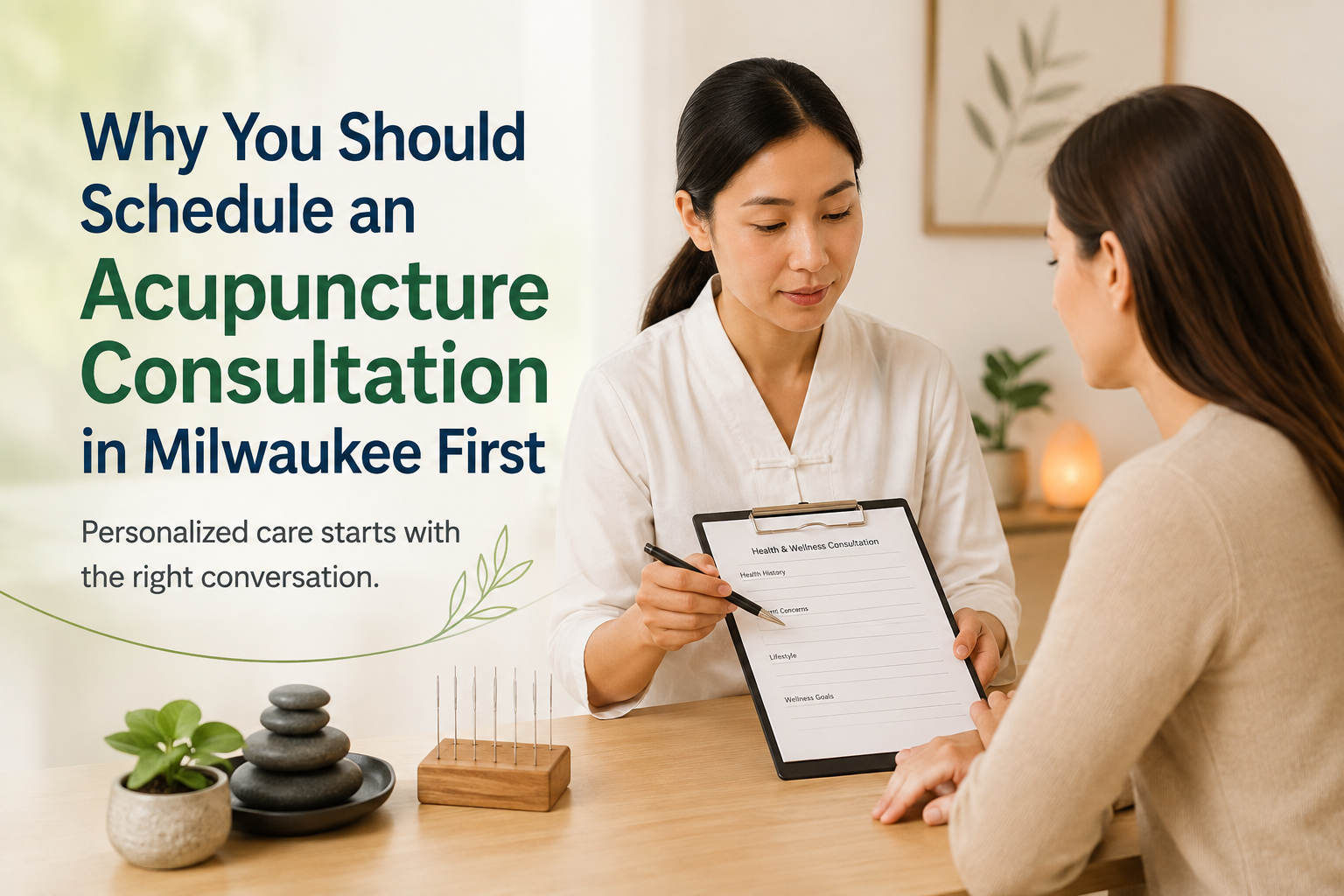
Acupuncture has helped many people manage pain, reduce stress, and support their overall wellness—but it works best when the approach is tailored to the individual. Before booking your first treatment, scheduling an acupuncture consultation in Milwaukee gives you and your practitioner the opportunity to determine whether acupuncture is appropriate for your needs and how to structure care effectively.
At Dr. Zhou’s Acupuncture and Wellness Clinic, located in the Milwaukee area, the first visit includes a detailed discussion of your health condition, lifestyle, and personal wellness goals. That initial conversation can make a meaningful difference in how your care unfolds.
What Is an Acupuncture Consultation?
An acupuncture consultation is the assessment and discussion that takes place before treatment begins. During this visit, your practitioner learns about your current symptoms, medical and health history, daily habits, medications, and the goals you hope to accomplish through acupuncture.
This information helps determine whether acupuncture is appropriate for your situation and how treatment might be structured. Rather than following a standard protocol for every patient, a skilled practitioner uses what they learn during the consultation to make informed decisions about your care. That individualized approach starts well before the first needle is placed.
6 Reasons to Schedule an Acupuncture Consultation in Milwaukee Before Treatment
1. Understand Whether Acupuncture Fits Your Needs
Acupuncture is not the right fit for every condition or every person—and that’s worth knowing before you commit to a treatment plan. A consultation creates space to evaluate your specific concerns and determine how acupuncture might play a role in your care.
For many patients, acupuncture works best as a complementary approach alongside existing medical treatment rather than as a replacement for it. Your practitioner can help clarify what role acupuncture might reasonably play given your situation.
2. Give Your Practitioner a Complete Picture of Your Health
Transparency matters in acupuncture just as it does in any other form of healthcare. Disclosing your current medications, relevant medical conditions, previous treatments, and any other therapies you’re using helps your practitioner make sound decisions about your care.
One area that deserves particular attention: patients who are pregnant or planning to become pregnant should inform their practitioner before treatment, as certain acupuncture points are contraindicated during pregnancy. Providing a full picture of your health allows your practitioner to proceed safely and appropriately.
3. Identify Your Personal Treatment Goals
People come to acupuncture for a wide range of reasons—chronic pain, muscle tension, stress, sleep issues, or general wellness support, among others. Your goals matter. The more clearly you can explain what you hope to accomplish, the better your practitioner can tailor the approach.
At the same time, it’s worth going in with realistic expectations. Acupuncture can be a valuable tool, but outcomes vary from person to person. A practitioner who takes the time to understand your goals will also help you develop a grounded sense of what treatment may or may not achieve.
4. Learn What Your First Treatment May Involve
Many people approach their first acupuncture session with questions—or concerns—about what it will actually feel like. A consultation is the right time to ask. Your practitioner can walk you through what to expect during a session, including where needles may be placed, how long the session lasts, and what sensations are common.
Acupuncture needles are typically very thin—much finer than the needles used for injections—and most patients experience minimal discomfort. That said, individual experiences vary, and it helps to know what’s considered normal before your first appointment.
5. Discuss a Potential Treatment Plan
There’s no universal answer to how many acupuncture sessions you’ll need. Treatment frequency and duration depend on the nature of your condition, how long you’ve been dealing with it, and how your body responds.
As a general principle, long-standing conditions often require more treatments than recently developed concerns. At Dr. Zhou’s clinic, treatment courses are reassessed after a series of sessions to evaluate progress and adjust the plan accordingly. A good treatment plan is individualized—not a fixed number of visits applied to everyone.
6. Make Safety and Comfort a Priority
Acupuncture is generally considered safe when performed by a qualified practitioner using sterile equipment. Minor effects, such as temporary bruising or mild soreness at needle sites, can occur but typically resolve quickly.
Choosing a licensed, experienced acupuncturist matters. So does feeling comfortable enough to speak up. If something feels wrong during treatment—unusual discomfort, unexpected sensations—let your practitioner know immediately. Open communication throughout the process supports both your safety and your overall experience.
What Should You Bring or Discuss During Your Consultation?
Arriving prepared helps your practitioner gather the most accurate picture of your health. Consider bringing or discussing the following:
- A list of current medications and supplements
- Relevant medical history and diagnoses
- Previous treatments or therapies you’ve tried
- A clear description of your current symptoms
- When your symptoms started and what makes them better or worse
- Any previous acupuncture experience
- Questions you have about treatment
- Your personal health and wellness goals
- Pregnancy status or plans for pregnancy, if applicable
The more information you can share, the more your practitioner can do with it.
Questions to Ask During an Acupuncture Consultation
First-time patients often aren’t sure what to ask. Here are some questions worth raising:
- Is acupuncture appropriate for my specific concern?
- What type of acupuncture approach might work best for me?
- How many sessions might I need, and how frequently?
- What should I expect during my first treatment?
- Are there any precautions I should be aware of?
- Can acupuncture be used alongside my current medical care?
- What temporary reactions should I expect, if any?
- How will we track whether treatment is helping?
There are no wrong questions in this setting. A good practitioner will welcome them.
Why Choose a Local Acupuncture Clinic in Milwaukee?
Working with a local practitioner supports continuity of care in a way that’s harder to maintain with a provider you see only once or intermittently. Acupuncture often involves multiple sessions over time, and having an established relationship with your practitioner makes it easier to reassess progress, adjust the treatment plan, and communicate openly as your condition changes.
Dr. Zhou’s Acupuncture and Wellness Clinic serves the Milwaukee area with acupuncture alongside Chinese herbal medicine and therapeutic Chinese massage. Having access to integrated wellness services in one location simplifies care for patients managing multiple concerns.
Schedule an Acupuncture Consultation in Milwaukee
Starting with a consultation is a straightforward way to approach acupuncture responsibly. It gives you the information you need to move forward with confidence and gives your practitioner what they need to support your care effectively.
If you’re considering acupuncture for pain management, stress, or general wellness, take the first step by reaching out to Dr. Zhou’s Acupuncture and Wellness Clinic. The clinic is located at 4601 N Oakland Avenue, Suite 101, Shorewood, WI 53211. You can book an appointment by phone or online to get started.
Frequently Asked Questions
What happens during an acupuncture consultation?
During an acupuncture consultation, your practitioner will ask about your current symptoms, medical history, medications, lifestyle, and treatment goals. This discussion helps determine whether acupuncture is appropriate for your needs and how care might be structured.
Do I need a consultation before acupuncture treatment?
While not always required, a consultation before your first treatment is strongly recommended. It allows your practitioner to personalize the approach and helps ensure that treatment is both safe and appropriate for your specific situation.
How should I prepare for my first acupuncture consultation?
Bring a list of your current medications and supplements, be ready to describe your symptoms and health history, and prepare any questions you have about treatment. Wearing comfortable clothing can also help if your practitioner wants to assess certain areas of the body.
Is acupuncture painful?
Acupuncture needles are very thin, and most patients experience little to no pain during insertion. Some people notice a mild sensation—pressure, warmth, or a brief tingling—at the needle site. Individual experiences vary, so discussing concerns with your practitioner beforehand is a good idea.
How many acupuncture treatments will I need?
The number of sessions varies depending on your condition and how your body responds to treatment. Long-standing conditions typically require more sessions than recently developed concerns. Your practitioner will reassess your progress over time and adjust the plan accordingly.